Sample editorial format. This page contains illustrative text and images, not a published interview with a real guest.
INSIDE
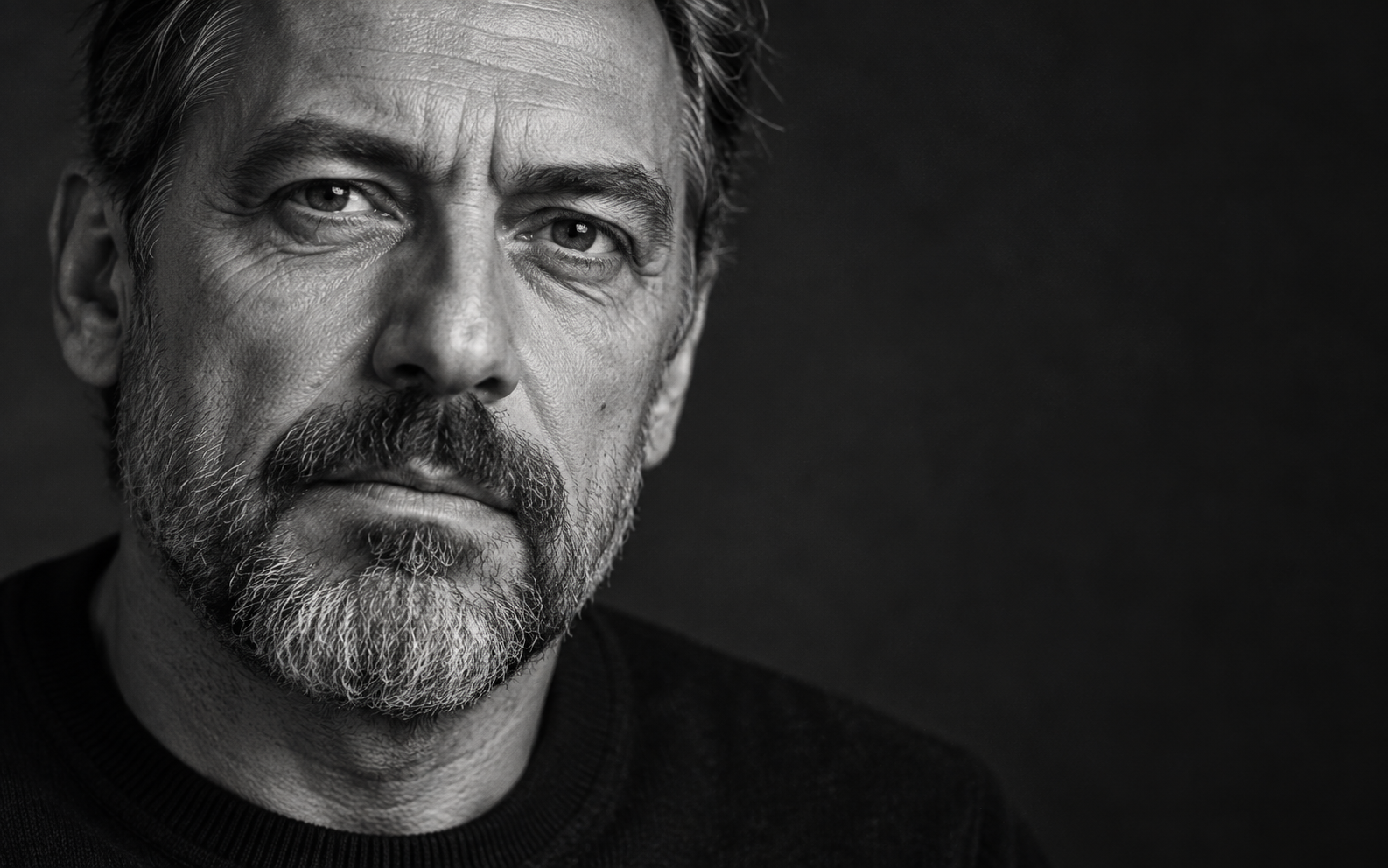
An illustrative portrait, without the usual trappings
Sample conversationStrategy · The individual
How to think, when the old rules no longer work.
Sample interview
Illustrative editorial format
01 / PROLOGUE
A conversation about an inner compass
Leadership begins where ready-made formulas end.
We tend to ask CEOs about numbers, markets and victories. But the most important decisions emerge elsewhere: between doubt and responsibility. Inside the CEO looks beyond the title to the person who must see further than it.
Text · Inside the CEO editorial teamImages · IllustrativeSample editorial content12 September 2026
Real strategy begins with honesty about the question you have been putting off for too long.
— illustrative editorial statement, not a guest quotation
I · An inner compass
01
What remains of a leader when the role no longer provides ready-made answers?
A strong answer needs no rush. This is space for the guest’s voice: alive, precise and free of corporate polish. For decisions that cannot be delegated, and the quiet in which they really take shape.
In a long conversation, what matters is not only what someone says, but what they return to. Recurring words often reveal a leader’s true frame of reference more clearly than declarations.
02
When did you last change your mind: not your tactics, but a conviction?
The conversation follows the person’s inner logic rather than a career chronology. It might hold the story of a mistake, an uncomfortable conclusion or the moment familiar confidence stopped being an advantage.
Maturity rarely looks like never being wrong. More often, it means recognising that an old truth has become too narrow, and choosing not to defend it just because it once led to success.
FIG. 01
The pause before an answer.Some decisions first need to be held in silence.
II · The price of a decision
03
What is the price of clarity when everyone demands speed?
The guest’s answer unfolds in substantial paragraphs, with pauses and room to breathe. We give readers space to understand what is said and to consider it against their own experience.
Speed makes sense once the direction is clear. Until then, it can be an elaborate way of avoiding a difficult question, with plenty of meetings, slides and well-chosen words.
04
How do you know whether your team agrees with you or has simply stopped arguing?
One of a leader’s most dangerous illusions is to mistake silence for agreement. The more senior the role, the more valuable honest feedback becomes, and the easier it is to create a space where it disappears.
The quality of discussion is therefore not a matter of temperament. It is management infrastructure: who can disagree, at what point, on what evidence and without what personal cost.
05
Which decision would you make more slowly today?
Distance changes the scale of a mistake. What once looked like an execution problem may later turn out to have been a mistake in choosing the game itself: a market, a model, a partnership or the person beside you.
This part of the interview should leave room for silence. It should keep the limits, cost and circumstances of an experience visible instead of turning it into a universal lesson.
Not every kind of speed is progress.
FIG. 02
Scale and distance.Sometimes you have to step outside the centre to see the system.
III · What remains
06
What do you protect in the company even when it does not appear in the quarterly report?
Some things become assets only over the years: keeping your word, not hiding bad news, a capable person’s right to say ‘I don’t know’. They are easy to call soft until the first real crisis.
In a mature company, culture does not hang on a wall. It shows in the decisions that remain acceptable when the deadline has passed, money is short and there are no attractive options.
07
Where is the line between personal responsibility and the need to control everything?
Responsibility does not mean being present for every decision. One of its hardest forms is building an environment where others can act without constant permission, but with clear principles.
Control reassures today and weakens tomorrow. Trust works the other way round: it creates discomfort at first, then becomes the only way to stop the company’s scale turning into the scale of your own exhaustion.
08
Who do you want to remain after your biggest professional role is over?
The final question brings the conversation back from the company to the person. From legacy as a monument to an inner criterion: what really mattered in everything you built, and what you would not trade for any result.
The interview does not end with a full stop. It leaves the reader with a question of their own, uncomfortable enough to stay with them after the page is closed.
03 / AFTERWORD
Five things that stay after the credits.
01
Doubt is a tool for precision, not a weakness.
02
Speed without direction only shortens the path to a mistake.
03
Culture begins with what a leader allows themselves to reveal.
04
Difficult decisions do not become simpler. They become more honest.
05
A person’s stature shows in the space they leave for others.
The next conversation
Create the conditions that make the future possible.